Example Lesson — Teaching the Past Simple Tense
In language teaching, grammar should be introduced through meaningful context and followed by structured practice and communication. This example lesson demonstrates how to introduce and practice the past simple tense.
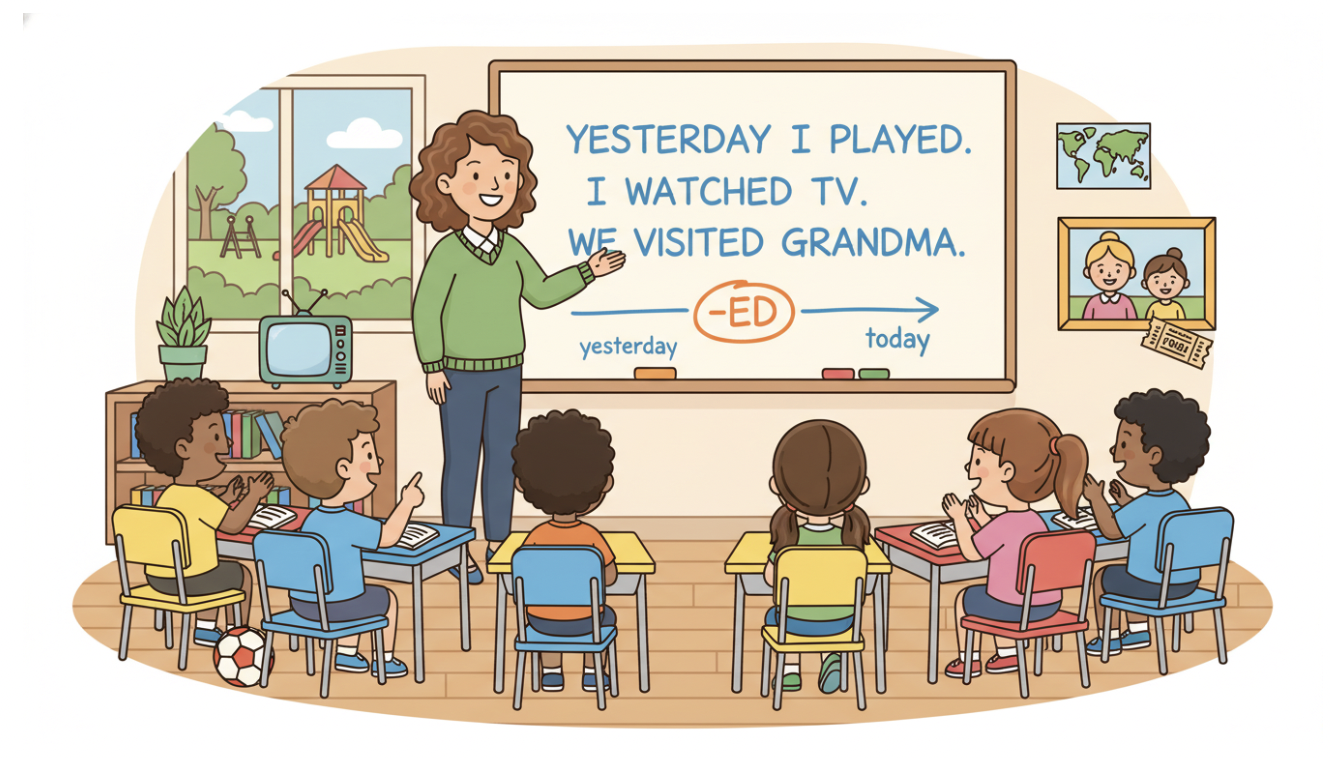
Lesson objective: Students will learn and practice using the past simple tense to talk about past activities.
Engage
The teacher introduces the topic and prompts learners to think about recent past experiences by asking questions about the previous day: - What did you do yesterday? - Did you watch TV yesterday? - Did you study English yesterday?
This activates background knowledge and creates a clear reason to use the target tense.
Study
The teacher presents the past simple form and explains its purpose: actions that happened in the past. Common irregular verbs are introduced: - go → went - eat → ate - see → saw
The teacher models sentences on the board and guides repetition so students focus on verb forms and pronunciation: - I went to school yesterday. - I ate dinner at home. - I saw my friend after class.
Practice
Students complete controlled exercises to reinforce accuracy, such as filling gaps with the correct past simple verb form: - Yesterday I ______ (go) to the park. - I ______ (eat) pizza for dinner. - I ______ (see) a movie.
This keeps attention on form while the teacher supports and corrects as needed.
Activate
Students move to a communicative task. In pairs, they ask and answer questions about what they did yesterday, taking turns to keep interaction balanced: - What did you do yesterday? - Did you watch TV yesterday? - Did you meet any friends?
This stage encourages more natural, fluent use of the past simple in conversation.
Teaching tip
Move from controlled practice to communicative speaking so students learn to use grammar for real meaning, not just rule memorization. - Engage with questions about yesterday to set a meaningful context - Study verb forms and model sentences with clear boardwork and drilling - Move from controlled practice to paired speaking for communicative use