Example Lesson — Using the ESA Framework
Let's look at a complete lesson built around the ESA framework — Engage, Study, Activate.
ESA Lesson Structure
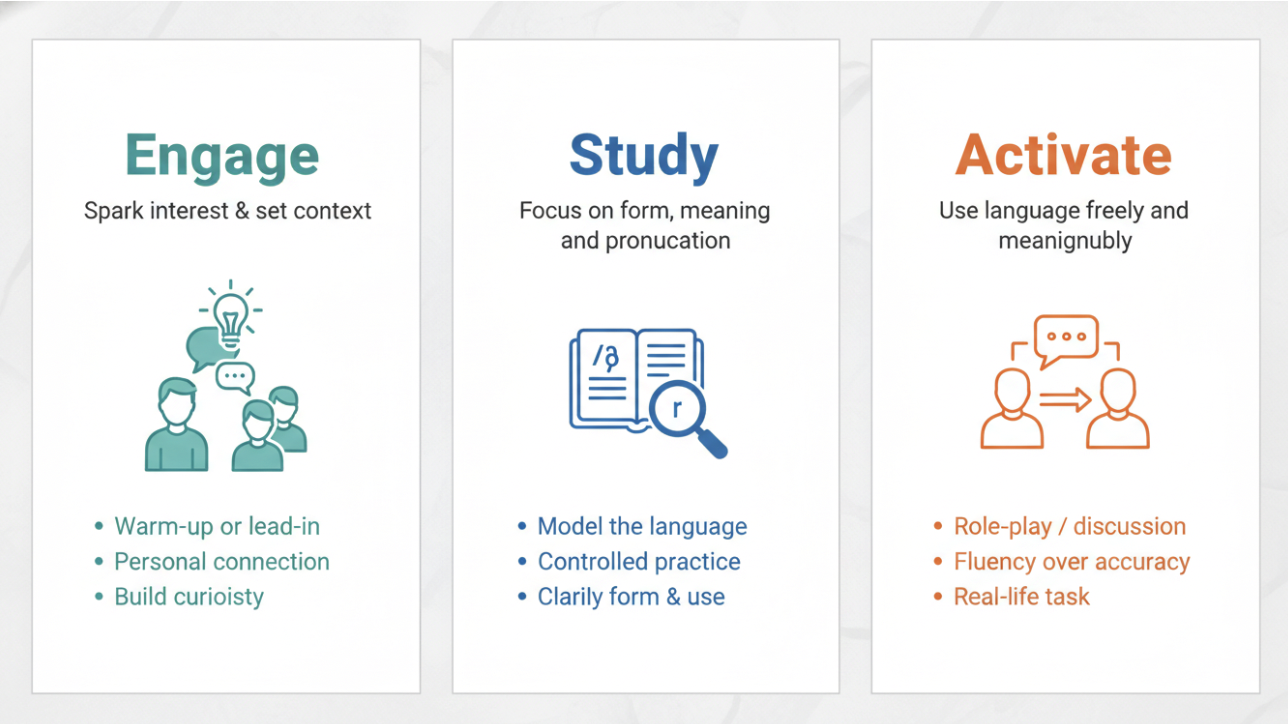
Engage: The teacher introduces the topic and captures students' interest. The aim is to activate background knowledge, lower resistance, and get learners participating early.
Study: The teacher focuses on new language such as vocabulary, grammar, or pronunciation. Learners work on meaning and form, with controlled practice to build accuracy.
Activate: Learners use the language in communicative activities. The goal is fluency and confidence, using the target language to complete a task, not just repeat forms.
Example Lesson: Introducing Food Vocabulary
Lesson objective: Students will learn and practice vocabulary related to food.
Engage
The teacher shows pictures of different foods and asks students which foods they recognize.
Example questions: - What food is this? - Do you like apples? - What do you usually eat for lunch?
This builds interest and prepares learners to notice and remember new vocabulary.
Study
The teacher introduces new vocabulary words.
Example vocabulary: - apple - bread - rice - chicken
Students repeat after the teacher and practice pronunciation. The teacher can also ask students to match each word to the correct picture to strengthen form-meaning links.
Activate
Students use the new vocabulary in simple, communicative sentences.
Example activity: role-play ordering food in a restaurant. - Student A: Customer - Student B: Waiter
Example dialogue: "I would like rice and chicken." "Would you like bread?"
A short round of quick feedback at the end helps learners keep the message-focused confidence they built during the task while still correcting key errors.
Teaching Tip
When teaching vocabulary, move beyond memorization. Build in opportunities for learners to use new words in realistic communication so vocabulary becomes accessible in real time, not only on a word list.