Writing Your First Full Lesson Plan
A lesson plan is not a script — it is a roadmap. It helps you stay focused, use time well, and teach with confidence.
Why lesson planning matters
New teachers sometimes skip lesson planning because it takes time. But a lesson without a plan often runs out of time before the most important stage, loses focus halfway through, or leaves students confused about what they were supposed to learn.
A good lesson plan takes 20–30 minutes to write — and saves you far more time and stress in the classroom.
✓What a lesson plan includes
- Topic — what the lesson is about
- Level — who the lesson is for
- Length — how long the lesson is
- Learning objective — what students will be able to do by the end
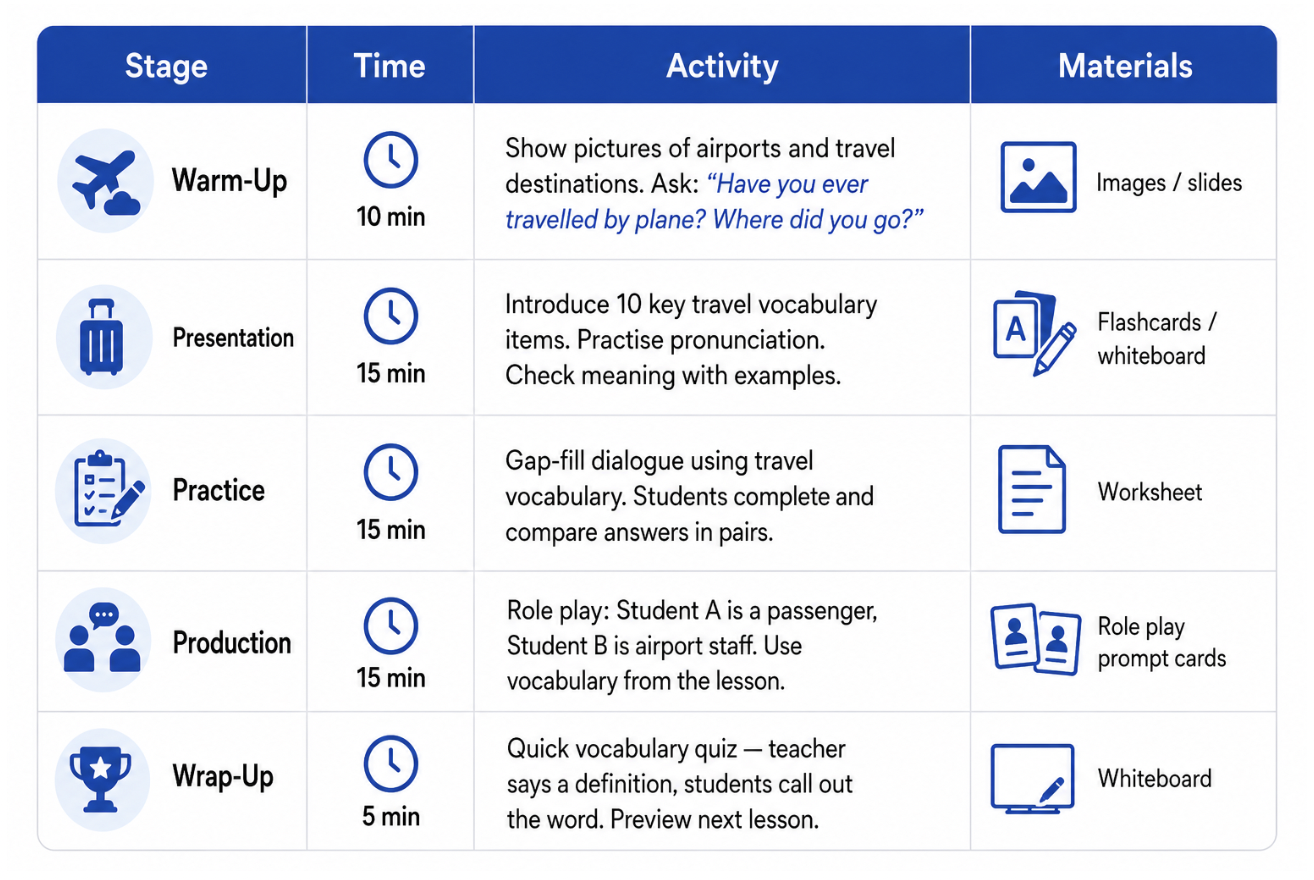
- Stages and timing — what happens at each stage and for how long
- Activities — what students will do at each stage
- Materials — what the teacher needs to prepare
Writing a strong learning objective
A learning objective is not a topic — it is a specific, measurable outcome.
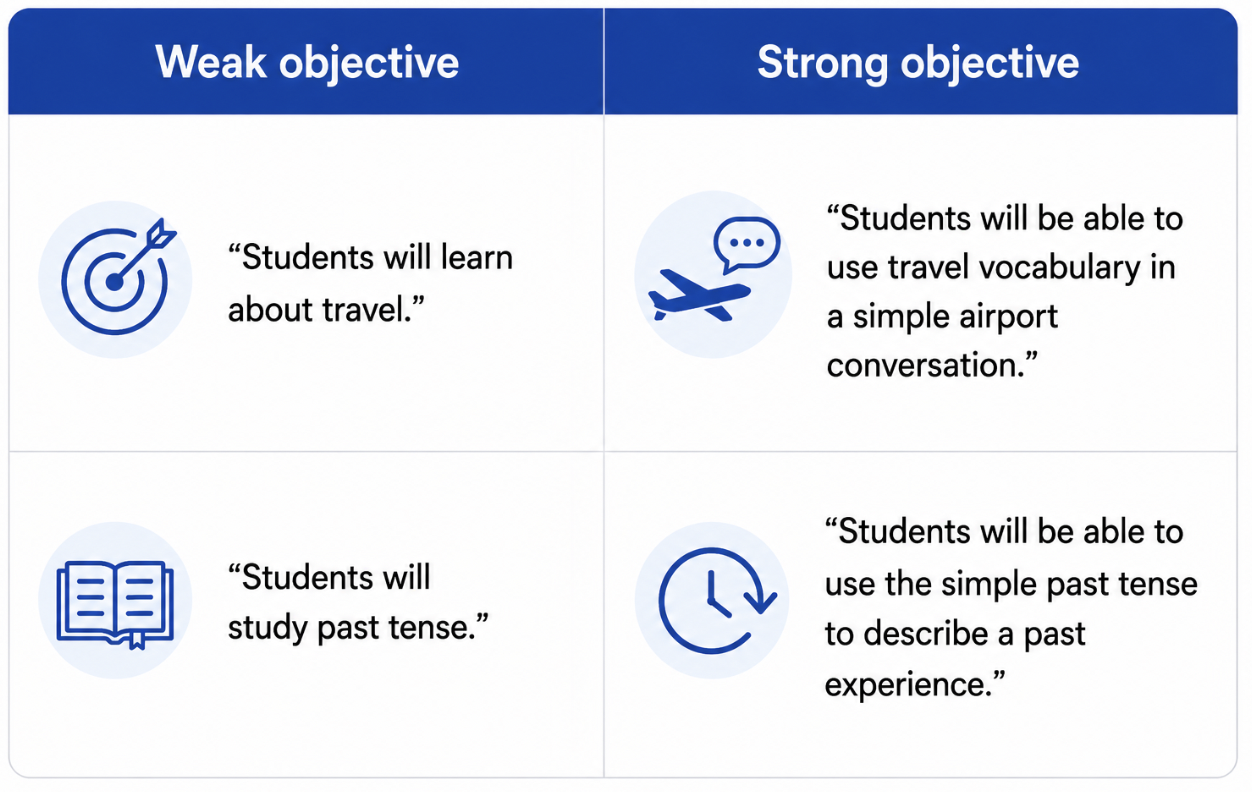
Formula: "Students will be able to + verb + specific task or context."
Complete lesson plan template
Lesson Topic: Travel Vocabulary Level: A2 Lesson Length: 60 minutes Learning Objective: Students will be able to use travel vocabulary in simple airport conversations. Materials needed: slides, flashcards, worksheets, role play prompt cards
Teacher reflection — after every lesson
Good teachers reflect on every lesson they teach. After class, ask yourself: - Did students achieve the learning objective? - Which activity worked best — and why? - Which activity didn't work — and what would I change? - Did I manage my time well? - Were all students engaged and participating?
Why this matters: Reflection is how teachers improve. Even experienced teachers ask these questions after every lesson.
✓Key takeaway
- Write a complete lesson plan with objectives, stages, timing, and materials
- Write a clear, measurable learning objective using the correct formula
- Apply the ESA framework independently in a full lesson plan