The PPP Method — Presentation, Practice, Production
PPP is one of the most widely used lesson structures in TESOL — especially for teaching grammar and vocabulary to beginners and intermediate students. It is simple, clear, and easy to follow.
The three stages
✓Presentation
The teacher introduces new language clearly with examples.
- "We use the past simple to talk about completed actions. For example: I walked to school. She called her friend."
- Keep it short — 5 to 10 minutes maximum
- Use visuals, timelines, or examples to make the meaning clear
✓Practice
Students practice the new language in a controlled way.
- Gap-fill exercises
- Sentence completion
- Matching activities
- Short drills
The goal here is accuracy — getting it right before using it freely.
✓Production
Students use the language more freely in a communicative activity.
- Role plays
- Discussions
- Storytelling
- Creative writing tasks
The goal here is fluency — using the language naturally without stopping to think about every rule.
PPP in action — a simple example
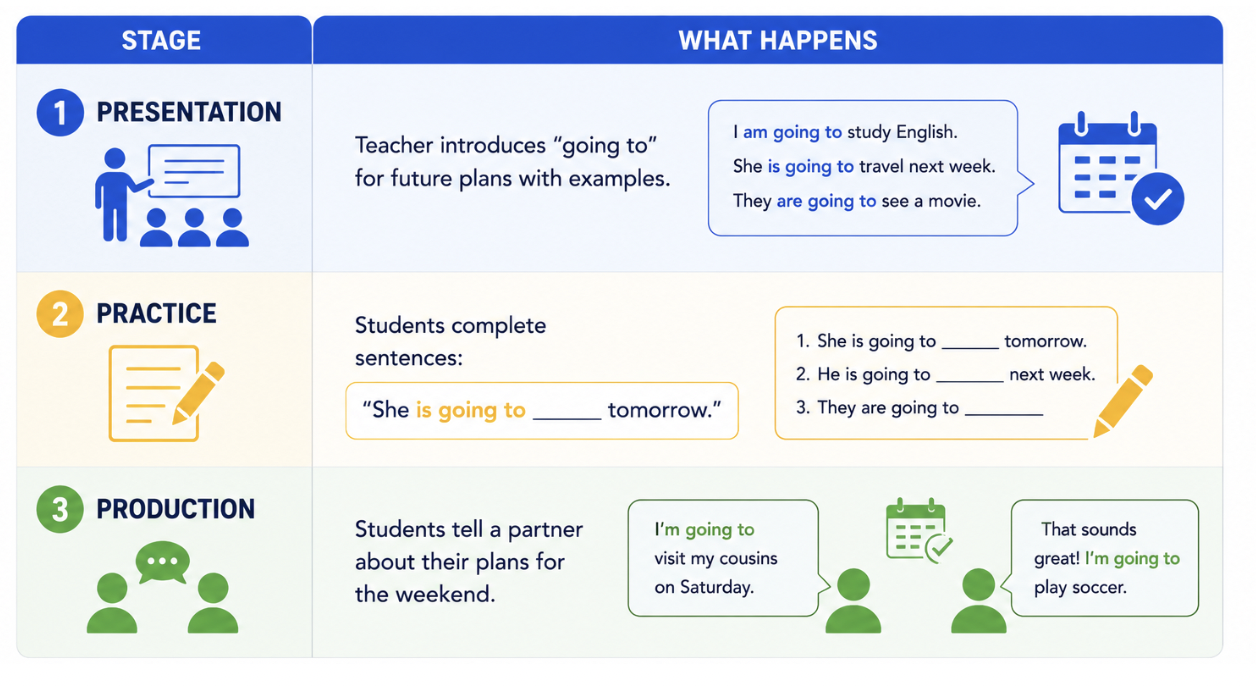
- Presentation: Teacher introduces "going to" for future plans with examples
- Practice: Students complete sentences: "She is going to ______ tomorrow."
- Production: Students tell a partner about their plans for the weekend
Quick Tip: PPP is great for introducing new grammar clearly. But do not spend too long in the Practice stage. The Production stage — where students use the language freely — is where real learning happens.