Learning Styles
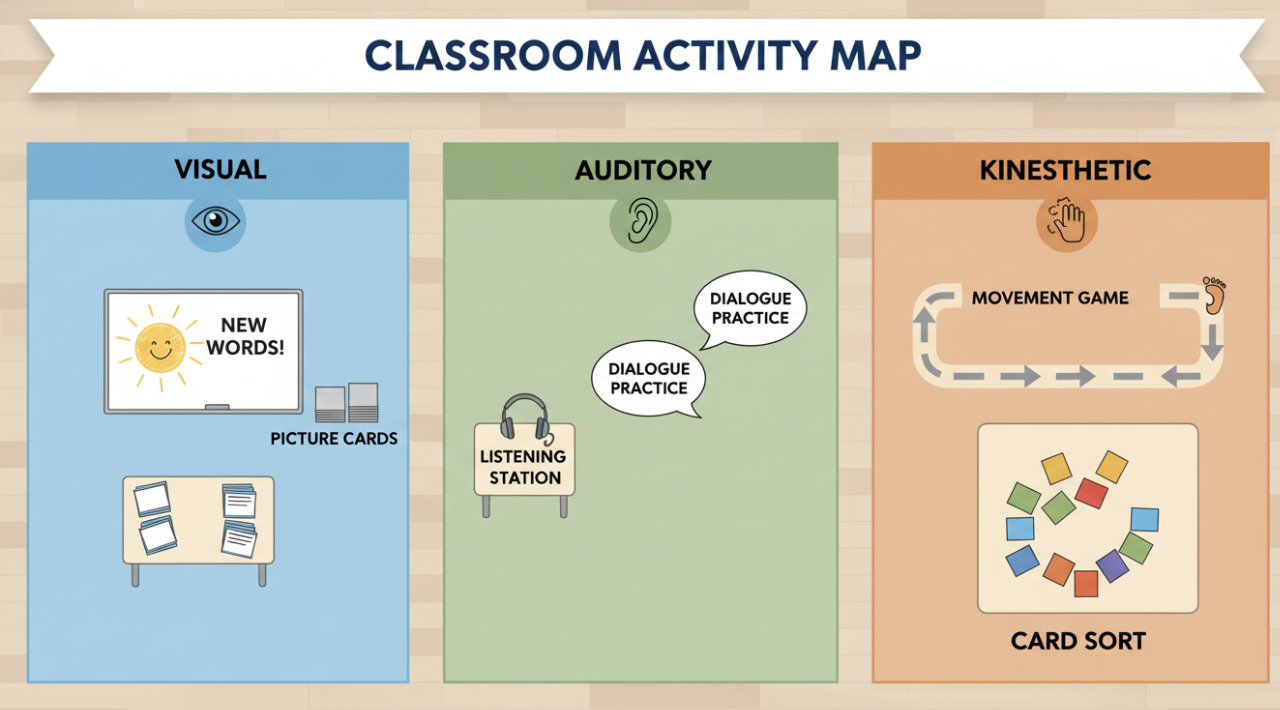
Every student is different. Some love listening. Others need to see things written down. Others learn best by doing.
✓Visual Learners
These students learn best through images, charts, written words, and visual information.
What this looks like in your classroom:
How to support them:
- They take notes and like to see words written on the board
- They respond well to pictures, diagrams, and graphic organizers
- They may struggle with long verbal explanations
- Write key vocabulary and grammar on the board
- Use pictures and images to introduce new language
- Use color-coding for grammar patterns
✓Auditory Learners
These students learn best through listening and speaking.
What this looks like in your classroom:
How to support them:
- They enjoy discussions and verbal explanations
- They often remember things they have heard better than things they have read
- They may find silent reading or writing tasks less engaging
- Use audio recordings and listening activities
- Read examples aloud and encourage repetition
- Use songs, chants, and spoken practice activities
✓Kinesthetic Learners
These students learn best through movement, hands-on activities, and physical engagement.
What this looks like in your classroom:
How to support them:
- They can find it hard to sit still for long periods
- They engage well with role plays, games, and interactive tasks
- They often learn by doing, not by watching or listening
- Use role plays and simulations
- Incorporate movement activities where students move around the room
- Use hands-on tasks like matching cards or building sentences with word strips
Most students are a mix of all three. Make sure your lessons include a variety of activity types.