Error Correction and Written Feedback
How you respond to student writing is just as important as the writing task itself. Good feedback improves writing — poor feedback discourages it.
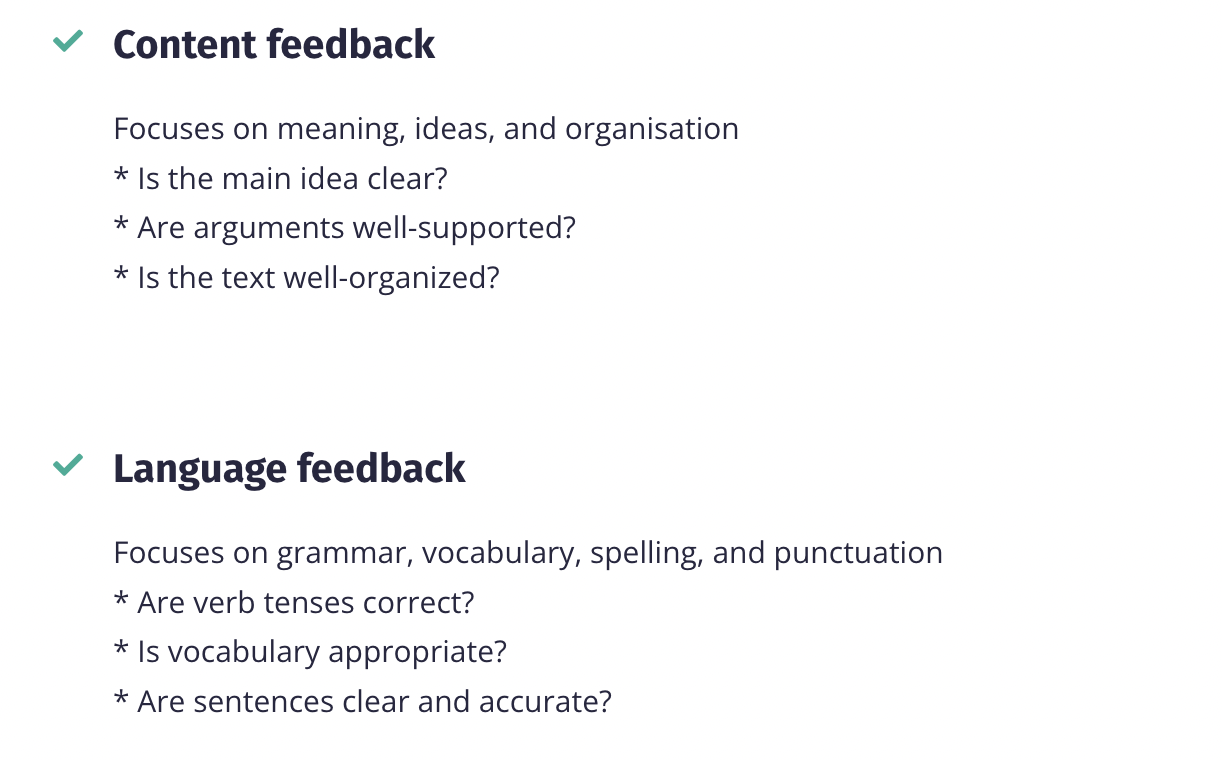
Two types of written feedback
Error correction strategies
Direct correction — The teacher corrects the error and writes the correct form. - Best for: Beginners who need clear models - Risk: Students copy the correction without understanding it
Indirect correction (coding) — The teacher marks the error with a code but does not provide the correction.
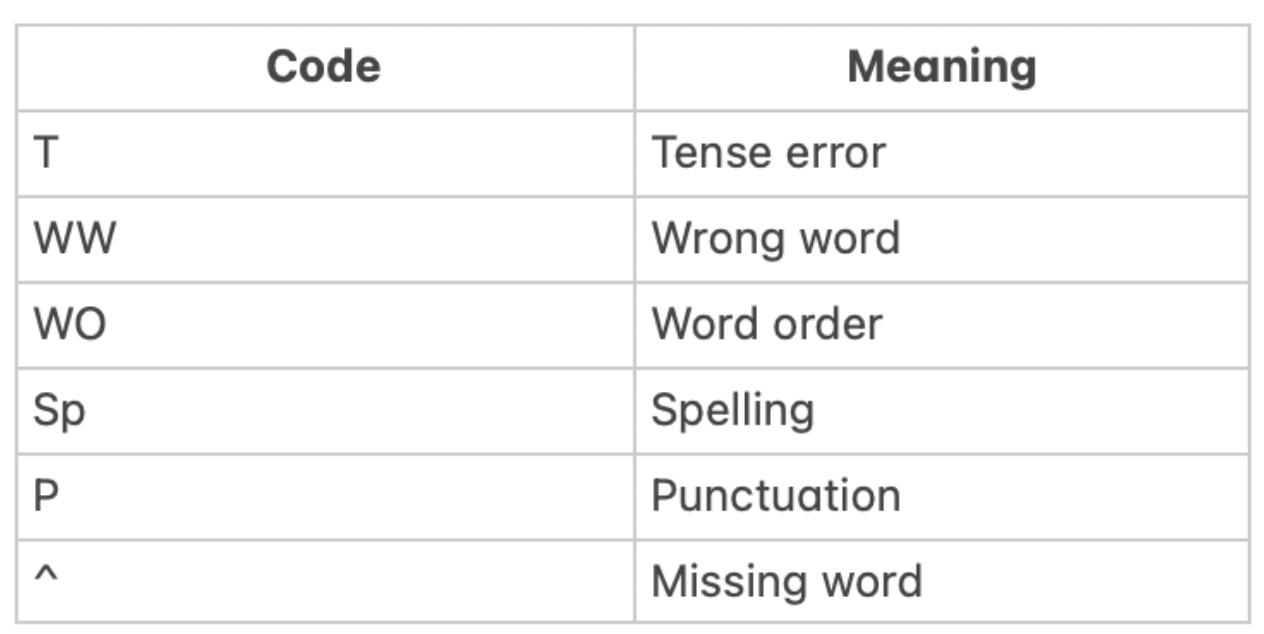
- Best for: Intermediate and above, encourages active engagement with errors
Selective correction — The teacher does not correct every error — only errors related to the focus of the lesson.
Why this matters: Correcting every single error overwhelms students and does not improve writing. Focus on the errors that matter most.
Peer feedback
Peer feedback checklist example: - Is the main idea clear? - Are ideas organized logically? - Is there anything confusing or unclear? - What is the strongest part of this writing?
Benefits: Develops critical thinking, reduces teacher workload, and students often accept feedback more openly from peers.
Self-editing
Self-editing checklist: - Is my main idea clear in the introduction? - Does each paragraph have one main idea? - Have I checked verb tenses? - Have I checked spelling and punctuation? - Does my conclusion respond to the task?
Feedback at a glance
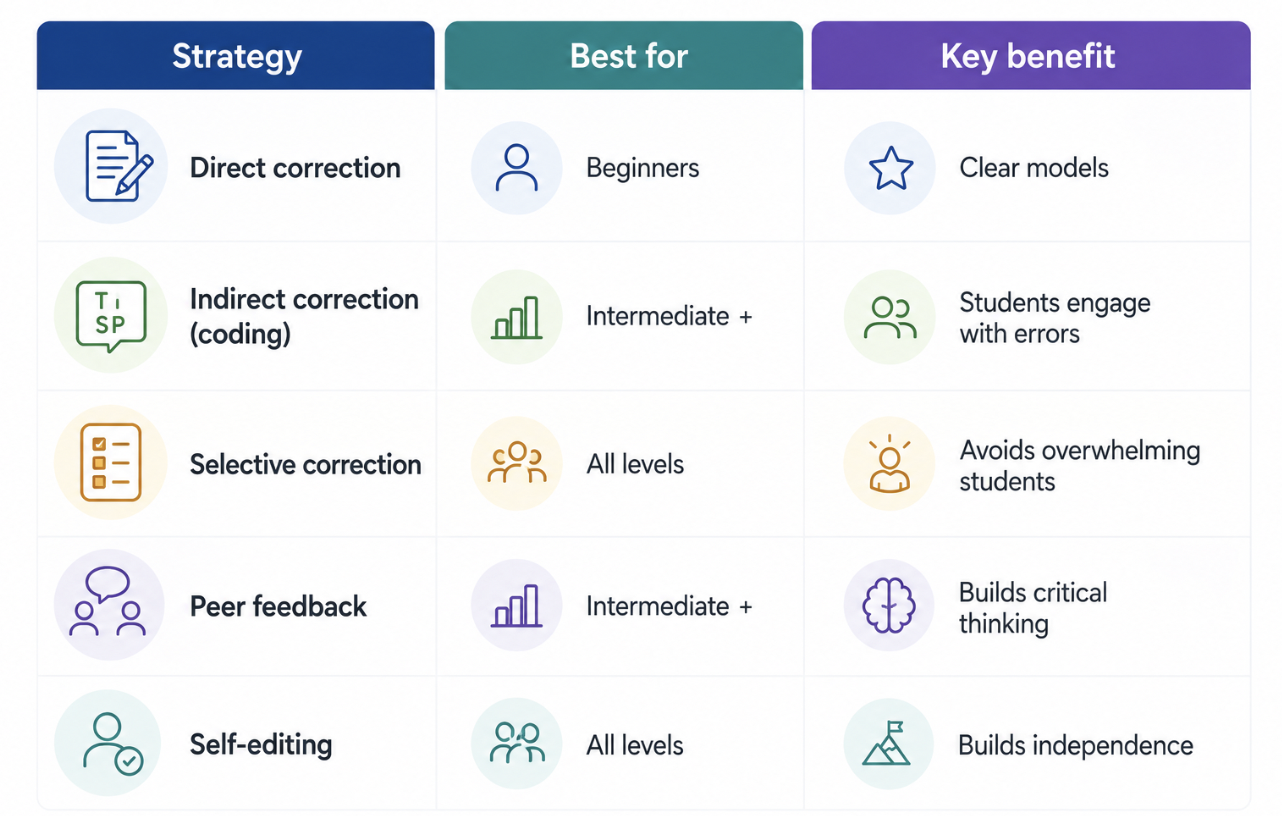
Good feedback is selective, specific, and encouraging. Focus on patterns — not every single error — and always balance correction with recognition of what students are doing well.