Top-Down and Bottom-Up Listening Strategies
Now that you understand what makes listening difficult, the next step is knowing how to teach it. There are two main processing strategies listeners use — and effective teaching uses both.
Bottom-Up Processing
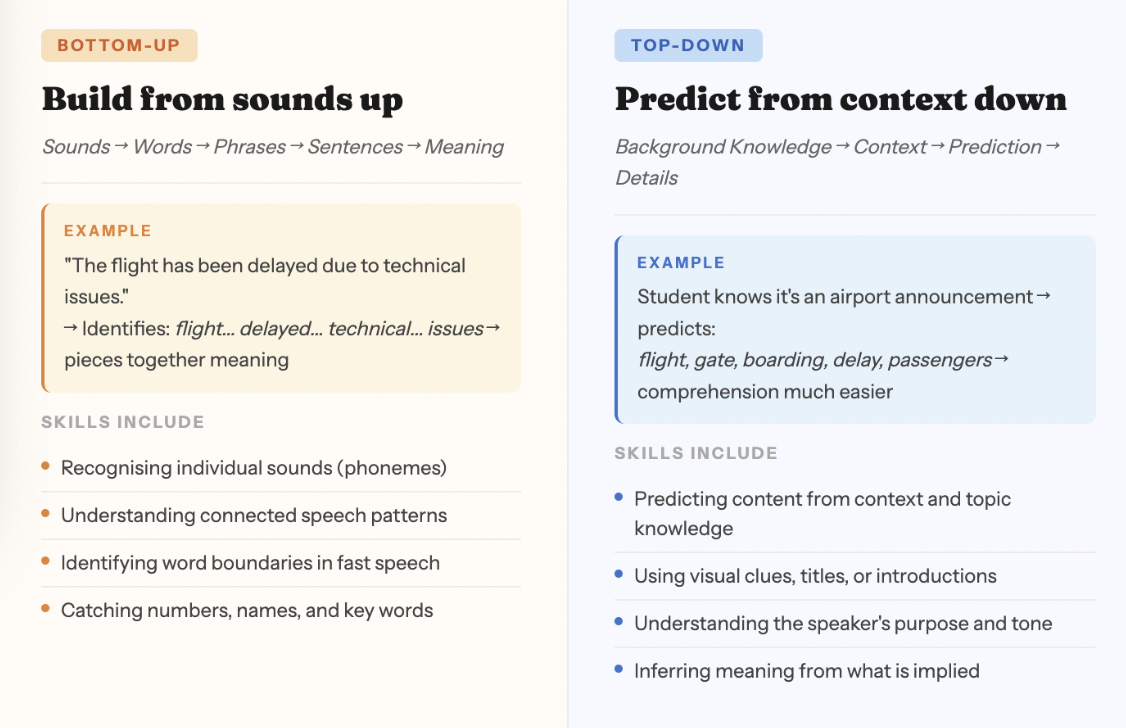
Bottom-up processing means building meaning from the smallest units of language upward — sounds → words → phrases → sentences → meaning. Think of it like building a house brick by brick.
Example: A student hears: "The flight has been delayed due to technical issues." Using bottom-up processing, they identify each word: flight... delayed... technical... issues — and piece together the meaning.
Bottom-up skills include: - Recognizing individual sounds (phonemes) - Understanding connected speech patterns - Identifying word boundaries in fast speech - Catching numbers, names, and key words
When bottom-up skills are weak: Students miss words, mishear sounds, and lose the thread of what is being said — even when they know the vocabulary.
Top-Down Processing
Top-down processing means using background knowledge, context, and predictions to understand meaning — working from the big picture down to the details. Think of it like reading a map before exploring a new city.
Example: A student knows they are about to hear an airport announcement. Even before listening, they predict they will hear words like: flight, gate, boarding, delay, passengers.
Top-down skills include: - Predicting content from context and topic knowledge - Using visual clues, titles, or introductions to prepare - Understanding the speaker's purpose and tone - Inferring meaning from what is implied, not just stated
When top-down skills are weak: Students understand individual words but struggle to grasp the overall meaning or purpose of what they hear.
Using both together
Skilled listeners switch between both strategies constantly. In the classroom, you need to develop both:
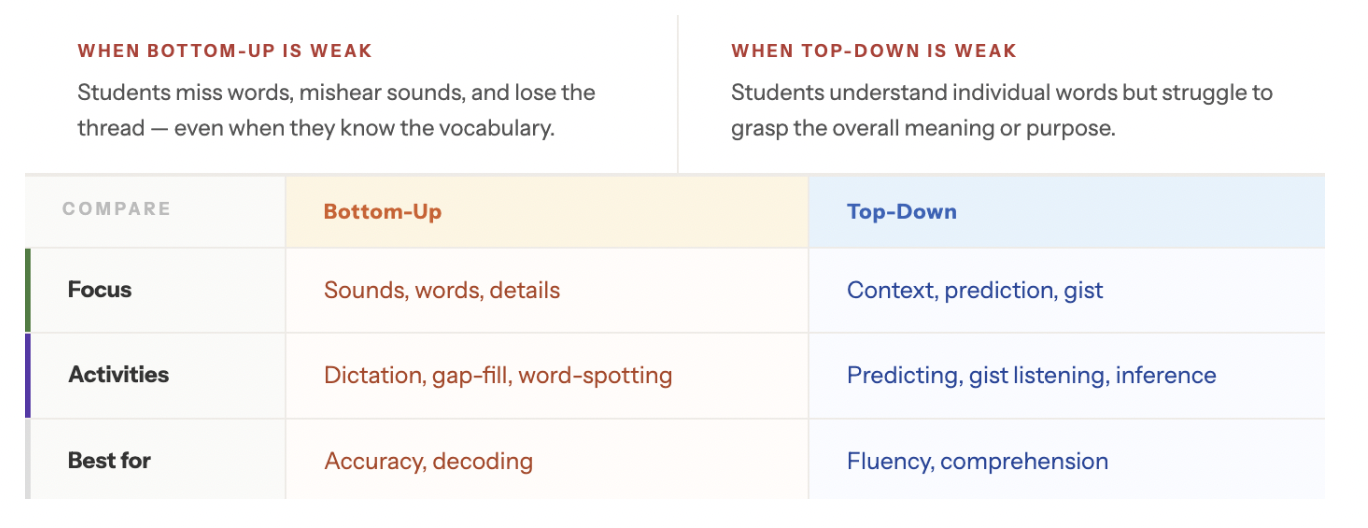
Key takeaway: Don't rely on just one approach. Bottom-up activities build decoding accuracy; top-down activities build comprehension and prediction.