Principles of Assessment in ESL
Assessment is not just about measuring what students know — it is about helping them learn more. Feedback is not the end of the process — it is the beginning of the next step.
Assessment is one of the most misunderstood aspects of language teaching. Many new teachers think of assessment as tests and grades. But effective assessment is much broader — and much more useful — than that.
What is assessment?
Assessment is the process of gathering information about student learning. It answers the question: "Are students making progress — and how do I know?"
Assessment is not only about grades. It includes everything a teacher does to find out what students can and cannot do — from formal tests to informal classroom observation.
Why assessment matters
Assessment serves three important purposes:
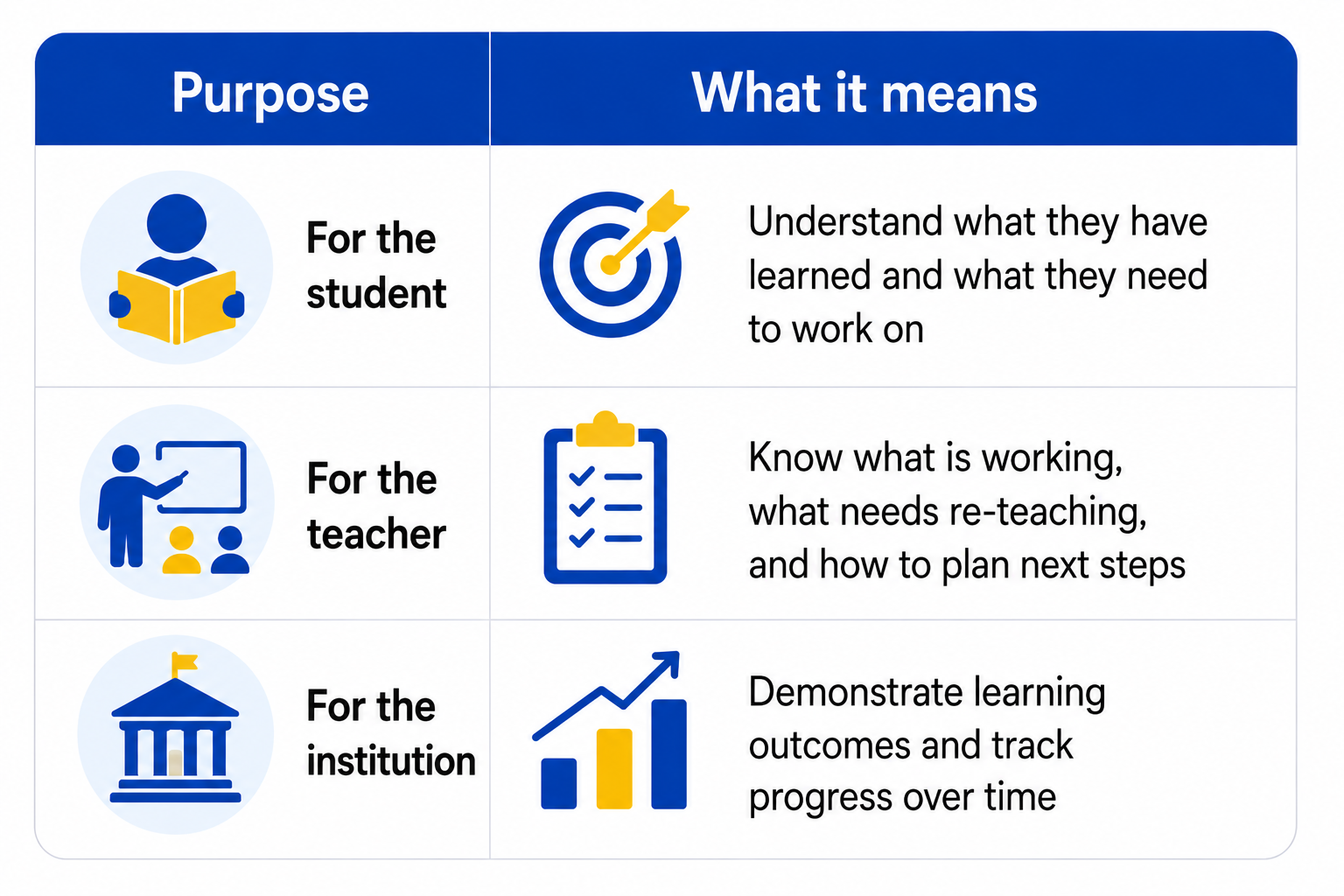
Core principles of good assessment
Validity
A valid assessment measures what it claims to measure. - A test of speaking ability should require students to speak — not write about speaking - A vocabulary test should test the vocabulary that was taught - Invalid assessment gives misleading information about student ability
Reliability
A reliable assessment produces consistent results. If two teachers mark the same piece of work, they should reach similar conclusions. - Use clear marking criteria - Use rubrics to standardize judgements - Be consistent in how you apply standards across students
Practicality
A practical assessment is manageable for both teacher and student. - Takes a reasonable amount of time to design, administer, and mark - Does not require resources the teacher doesn't have - Doesn't cause unnecessary stress or disruption
Washback
Washback refers to the effect assessment has on teaching and learning. - Positive washback: assessment encourages good learning habits — students study meaningfully, practise real skills - Negative washback: assessment encourages unhelpful habits — students memorize for a test without understanding
Key principle: Design assessments that encourage the kind of learning you want to see. If you test only grammar rules, students will only study grammar rules.
Authenticity
Authentic assessment uses real-world tasks that reflect how language is actually used. - Instead of: "Write 10 sentences using the present perfect." - Try: "Write an email to a friend describing what you have done this week."
Authentic tasks are more motivating, more meaningful, and give a truer picture of student ability.
✓Key takeaway:
- Explain why assessment is important in ESL teaching
- Describe the five core principles of good assessment
- Identify examples of valid, reliable, and authentic assessment tasks