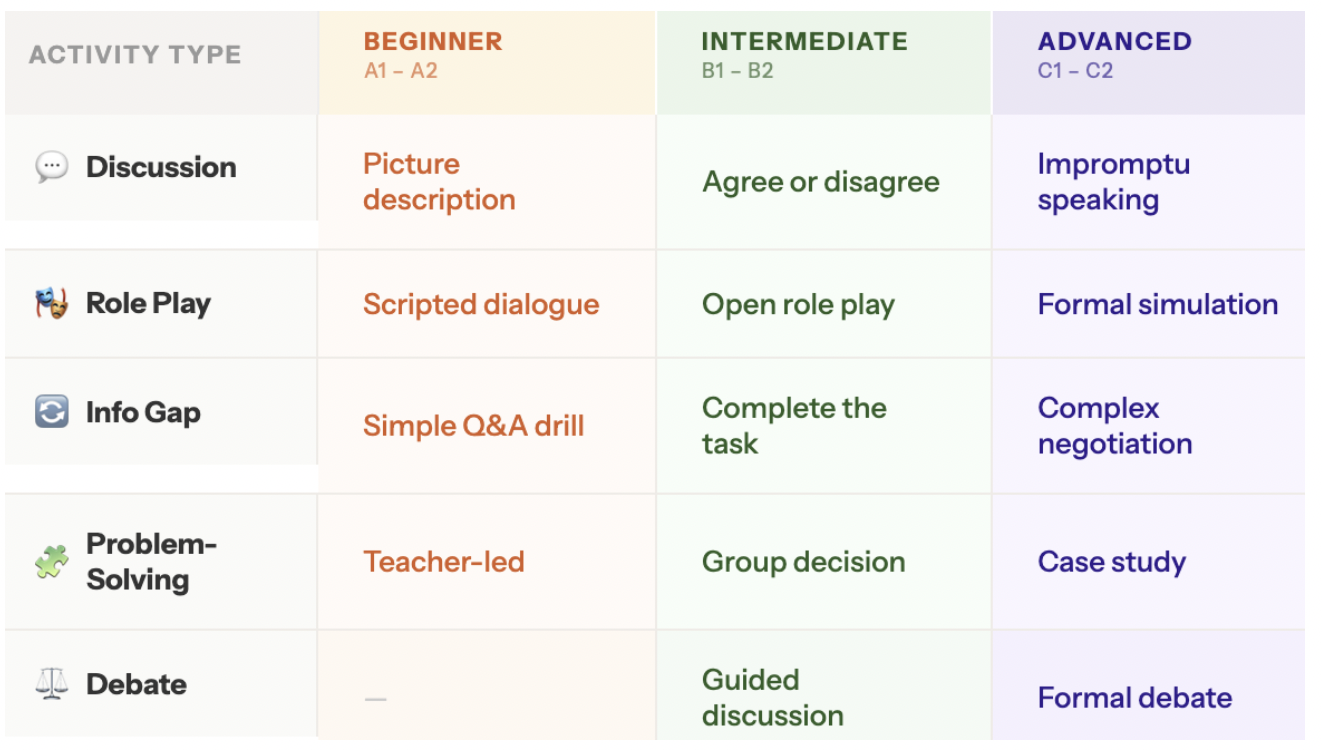
Speaking Activities for All Levels
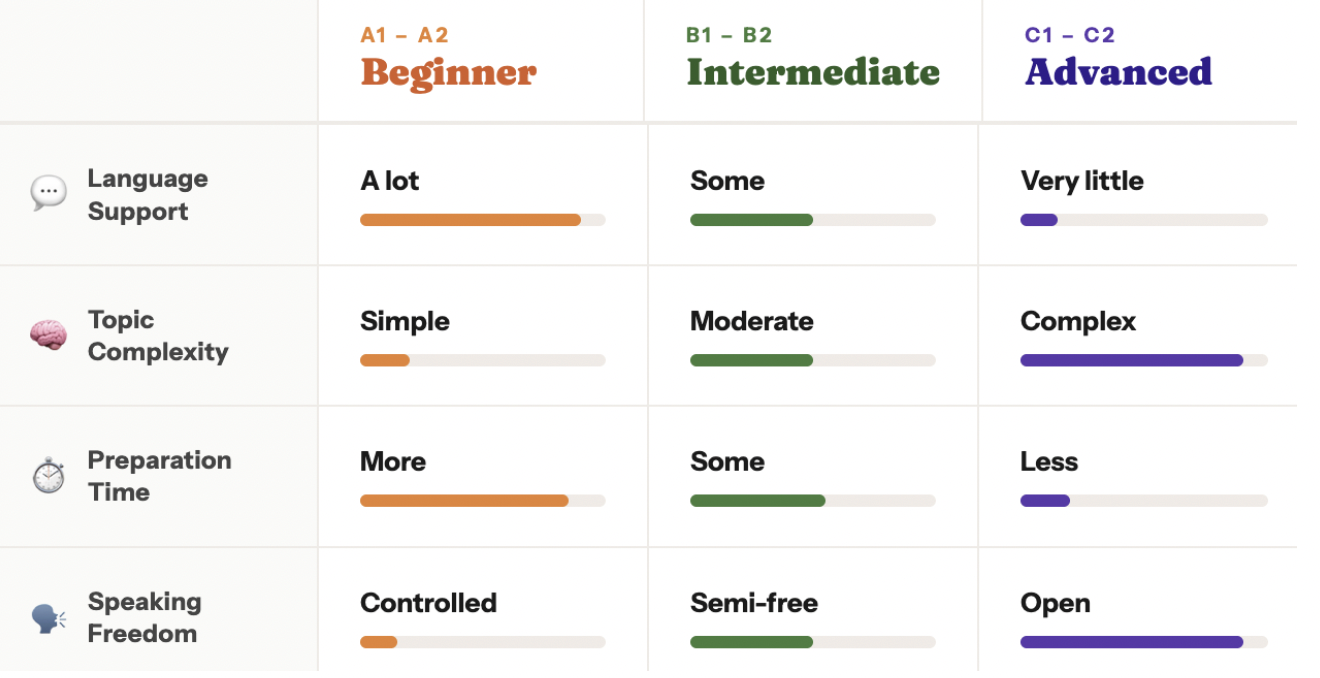
Good news — you don't need a completely different activity for every level. You can take the same activity type and adjust it depending on your students. The secret is knowing what to change:
Beginner (A1–A2)
Give students the language before you ask them to speak.
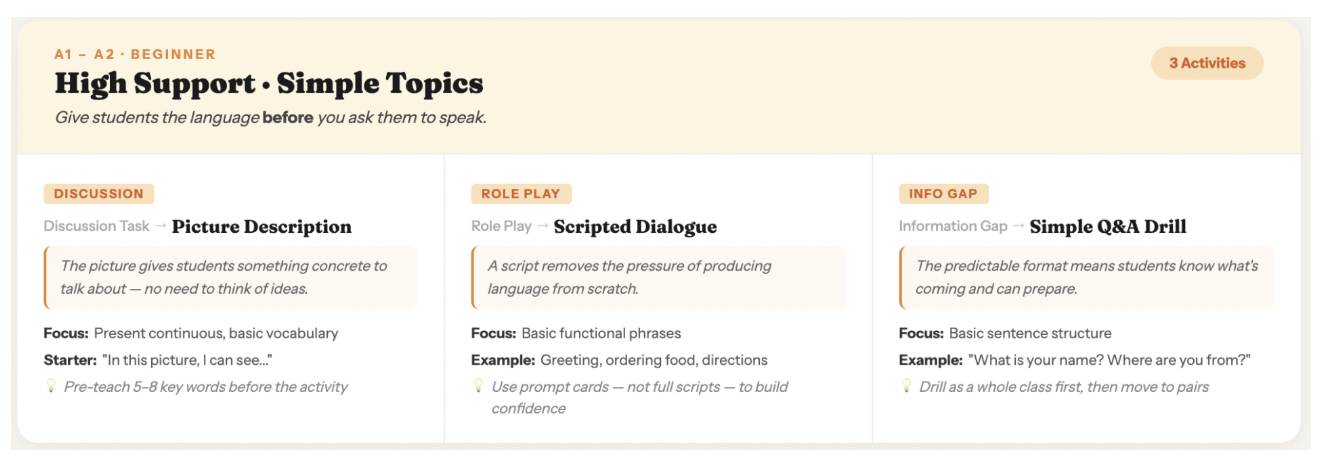
Discussion Task → Picture Description - Sentence starter: "In this picture, I can see..." - Language focus: Present continuous, basic vocabulary - Tip: Pre-teach 5–8 key words before the activity
Role Play → Scripted Dialogue - Language focus: Basic functional phrases - Tip: Use prompt cards — not full scripts — to build confidence
Information Gap → Simple Q&A Drill - Example: "What is your name? Where are you from?" - Tip: Drill as a whole class first, then move to pairs
Intermediate (B1–B2)
Give students a starting point, then let them take over.
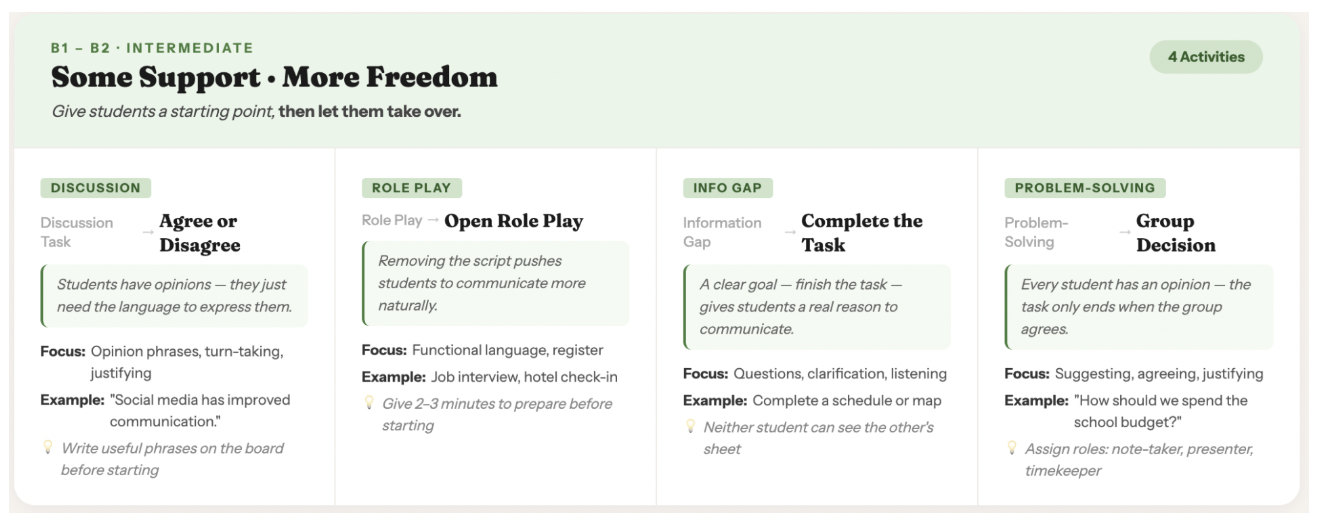
Discussion Task → Agree or Disagree - Example: "Social media has improved the way people communicate." - Tip: Give useful phrases first — "In my opinion...", "I agree because...", "On the other hand..."
Role Play → Open Role Play - Example situations: Returning a faulty product, checking into a hotel, a job interview - Tip: Give 2–3 minutes to prepare before starting
Information Gap → Complete the Task - Example: Complete a schedule, a map, or a profile - Tip: Make sure neither student can see the other's sheet
Problem-Solving → Group Decision - Example: "You have a limited budget for your school. How should you spend it?" - Tip: Assign roles — note-taker, presenter, timekeeper
Advanced (C1–C2)
Remove the safety net and push students to think and speak on their feet.
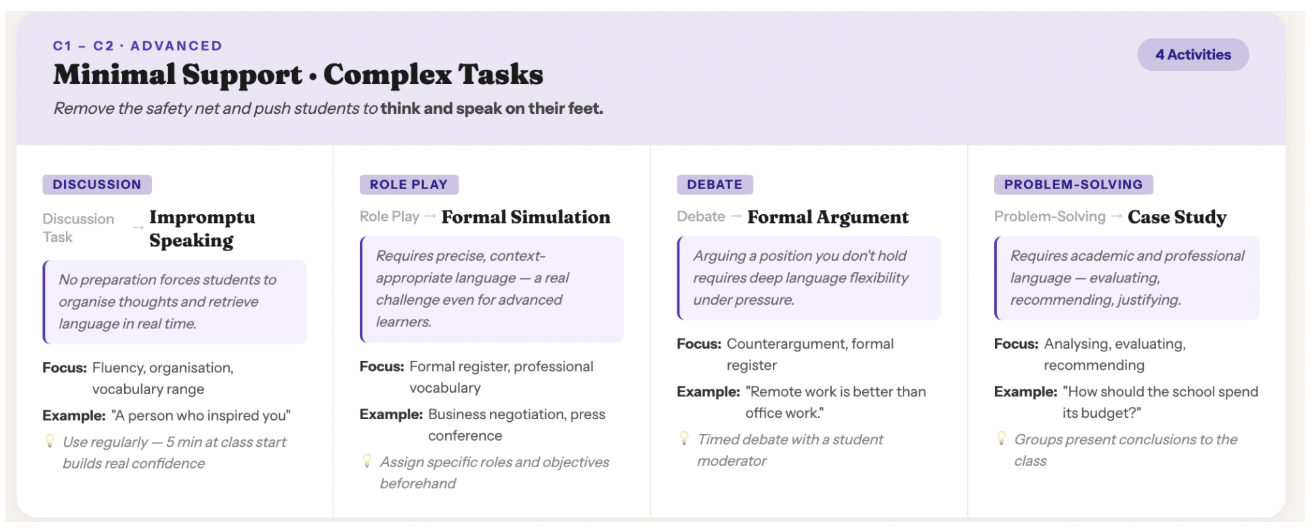
Discussion Task → Impromptu Speaking - Example topics: A memorable journey, the future of technology, a person who inspired you - Tip: Use regularly — even 5 minutes at class start builds real confidence
Role Play → Formal Simulation - Example scenarios: A business negotiation, a press conference, a formal complaint hearing - Tip: Assign specific roles and objectives before the simulation
Debate → Formal Argument - Example: "Remote work is better than working in an office." - Tip: Timed debate with a student moderator
Problem-Solving → Case Study - Example: "A local school has a limited budget. How should they spend it?" - Tip: Groups present conclusions to the class
Quick Reference