Task-Based Learning (TBL)
Task-Based Learning takes CLT one step further. In TBL, the entire lesson is built around a meaningful real-world task that students must complete using English.
The core idea
Instead of teaching language first and then practicing it, TBL gives students a task to complete — and the language learning happens as they work toward the goal.
A simple TBL lesson structure
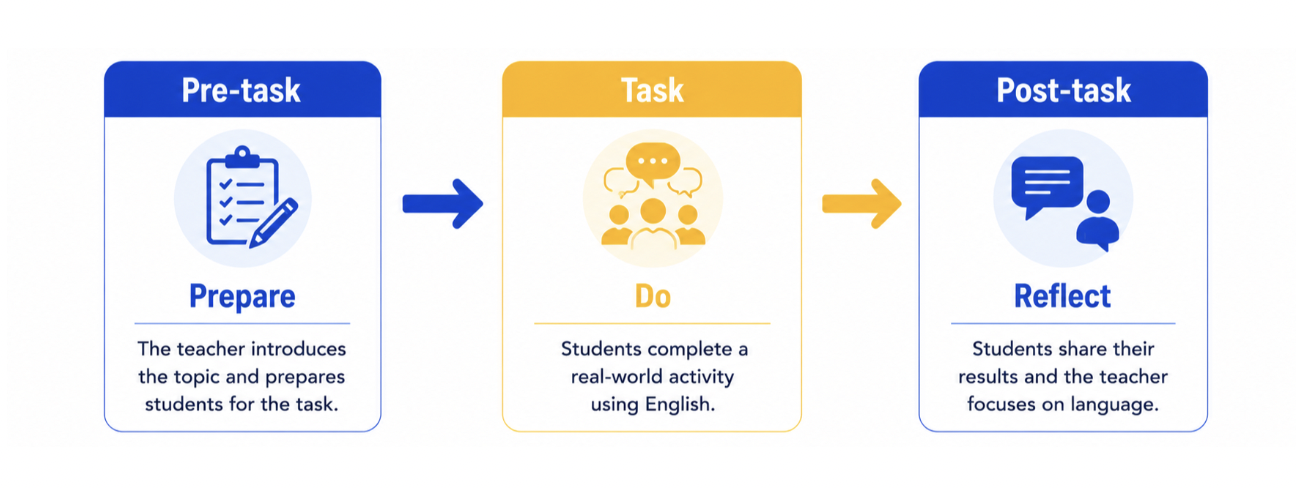
Pre-task → Task → Post-task Prepare Do Reflect
Pre-task: The teacher introduces the topic and prepares students for the task. Task: Students complete a real-world activity using English. Post-task: Students share their results and the teacher focuses on language.
✓Examples of TBL tasks
- Plan a weekend trip using a map and a budget
- Solve a problem — "Your company needs to cut costs. What do you recommend?"
- Write and record a short news report
- Plan and present a menu for a new restaurant
Why TBL works
When students are focused on completing a task, they use language naturally — because the goal is to finish the task, not to practice grammar. This is exactly how language works in the real world.
Quick Tip: TBL works best with intermediate and above students. For beginners, make sure the task is simple and the language support is strong.