Teaching Large and Mixed-Level Classes
Large classes and mixed-level classes are two of the most common challenges in real-world ESL teaching — and both require specific strategies to manage effectively.
Teaching large classes
A large class in ESL is typically considered 30 or more students — though in some contexts it means 50 or even 100.
The main challenges:
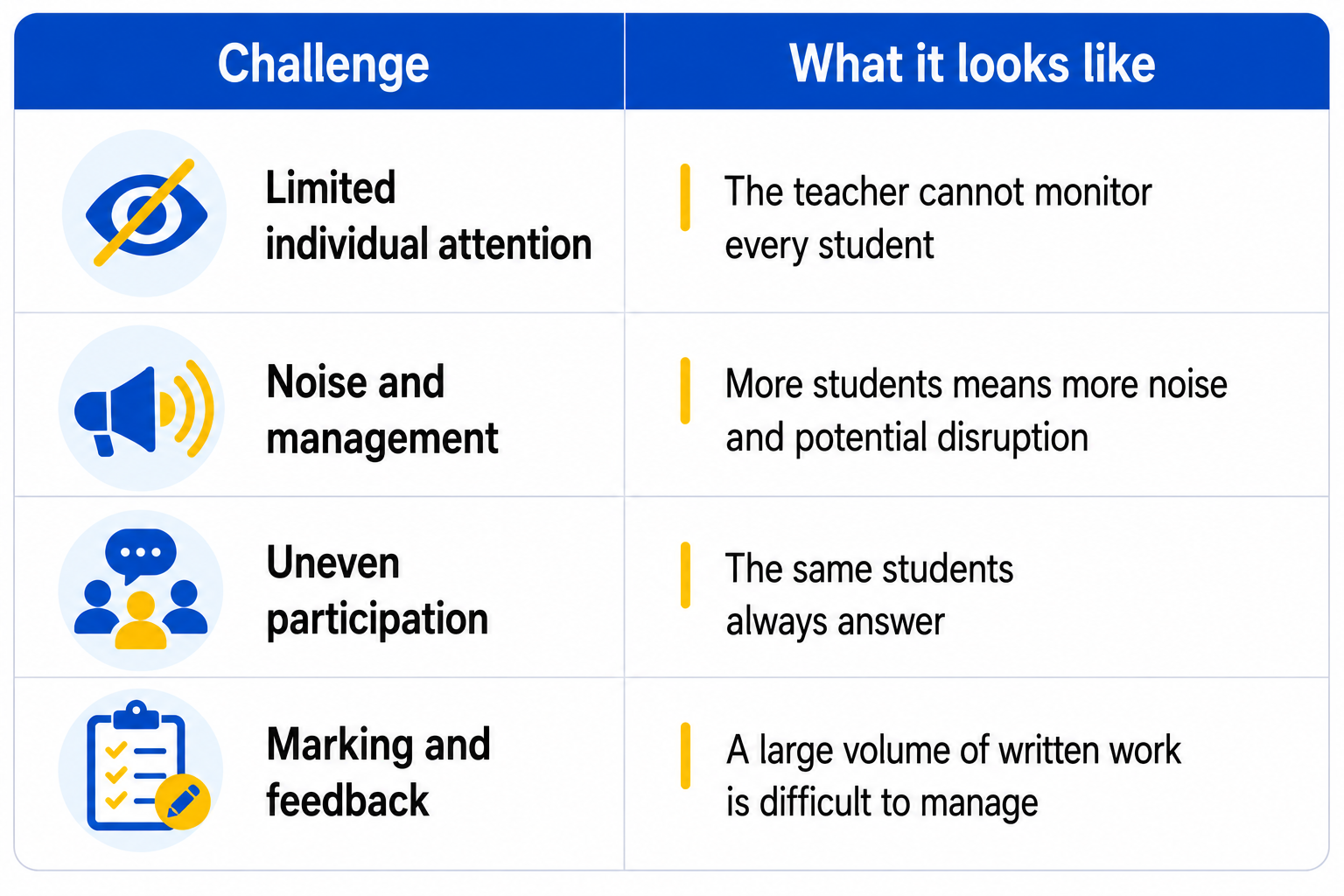
✓Strategies for large classes:
- Maximize pair and group work — students cannot all speak to the teacher, but they can all speak to each other. Pair and group tasks ensure everyone uses English simultaneously.
- Use peer checking — students compare and discuss answers in pairs before whole-class feedback. This reduces the pressure of public answers and increases engagement.
- Choral drilling — whole-class repetition of target language is manageable in large groups and ensures everyone practises.
- Assign group roles — in large classes, group work without structure becomes chaotic. Assign clear roles — leader, note-taker, presenter, timekeeper.
- Use written responses — instead of calling on individuals, ask all students to write a quick answer. Circulate and check while they write.
- Selective marking — you cannot mark every piece of work from 50 students. Mark a representative sample, use peer feedback, and self-assessment checklists regularly.
Teaching mixed-level classes
As covered in Module 11, mixed-level classes are the norm in real-world ESL teaching. In this lesson, the focus is on applying those strategies in the context of real teaching environments.
The key shift in mindset:
Stop trying to teach everyone the same thing at the same time. Start designing lessons where different students can engage with the same topic at different depths.
✓In practice:
- Tiered tasks — same topic, different complexity. All students work; no one waits.
- Open-ended tasks — tasks where any level of response is valid. "Tell me about your weekend" works for A1 and B2 alike.
- Differentiated questioning — ask simpler questions to less confident students, more complex questions to stronger ones. Do this naturally, not visibly.
- Extension tasks — always have something extra ready for fast finishers.
- Embrace mixed-level pair work — stronger students consolidate their knowledge by explaining; weaker students benefit from peer support.
✓Key takeaway:
- Apply at least three practical strategies for managing a large ESL class
- Adapt lesson activities for mixed-level groups in a real classroom context
- Explain the mindset shift required to teach effectively in mixed-level environments