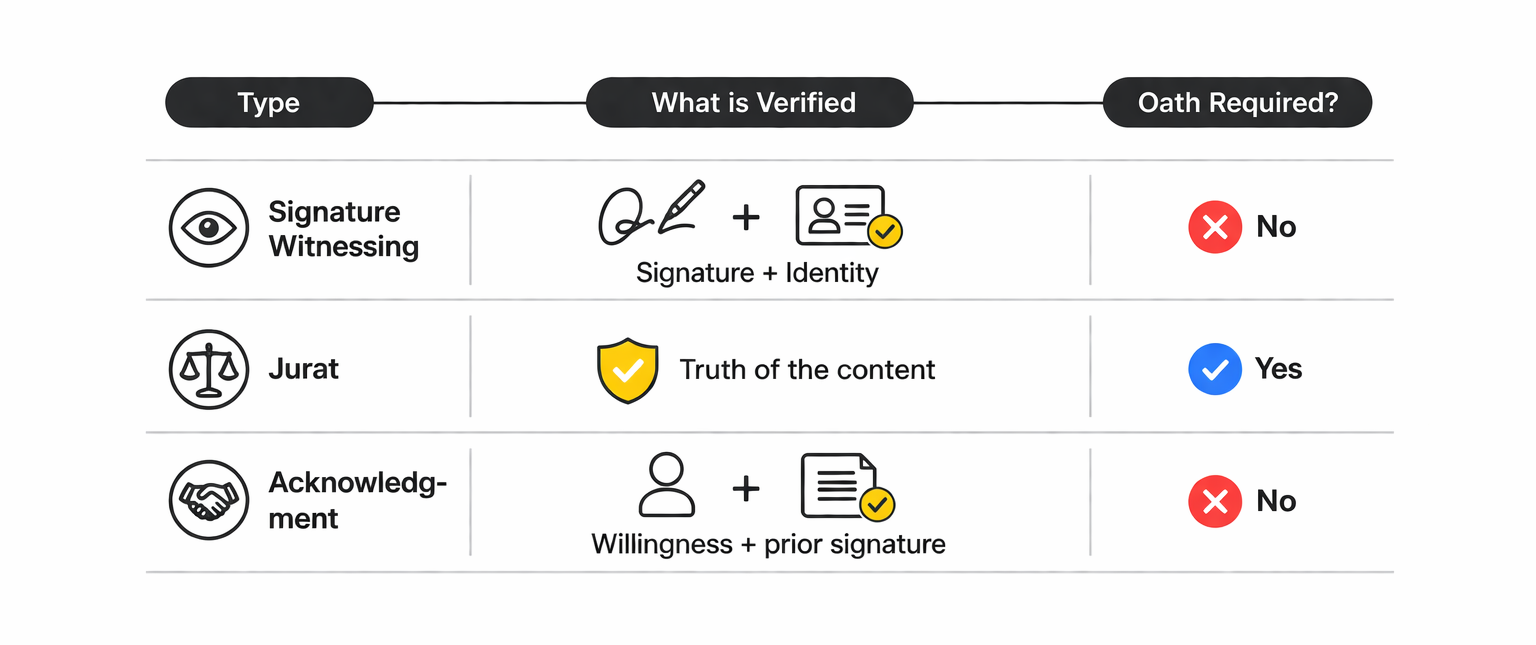
Signature Witnessing
Signature witnessing is a notarial act in which the notary watches the signer physically sign a document and verifies the signer's identity.
The purpose is to confirm that: - The signature is genuine - The signer is the correct person - The signing was done voluntarily
When to Use
Signature witnessing is used when the act of signing must be confirmed, but the contents do not require a sworn statement. - Agreements between individuals - Business contracts - Authorization or consent forms - Internal company documents
Used when identity and signature authenticity matter, but truthfulness is not being sworn.
The Procedure
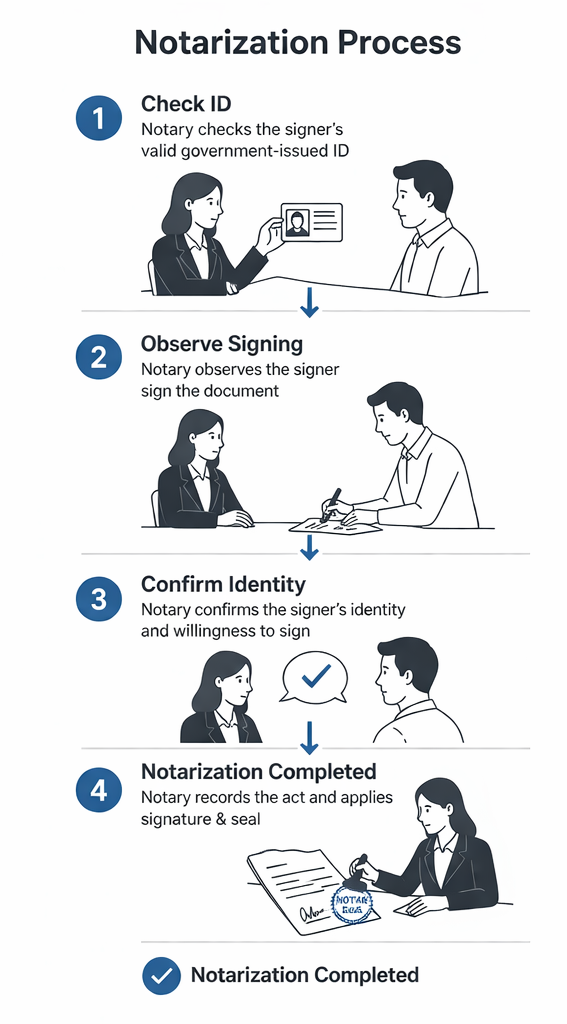
Real Example: A client brings in a business agreement that is not yet signed.
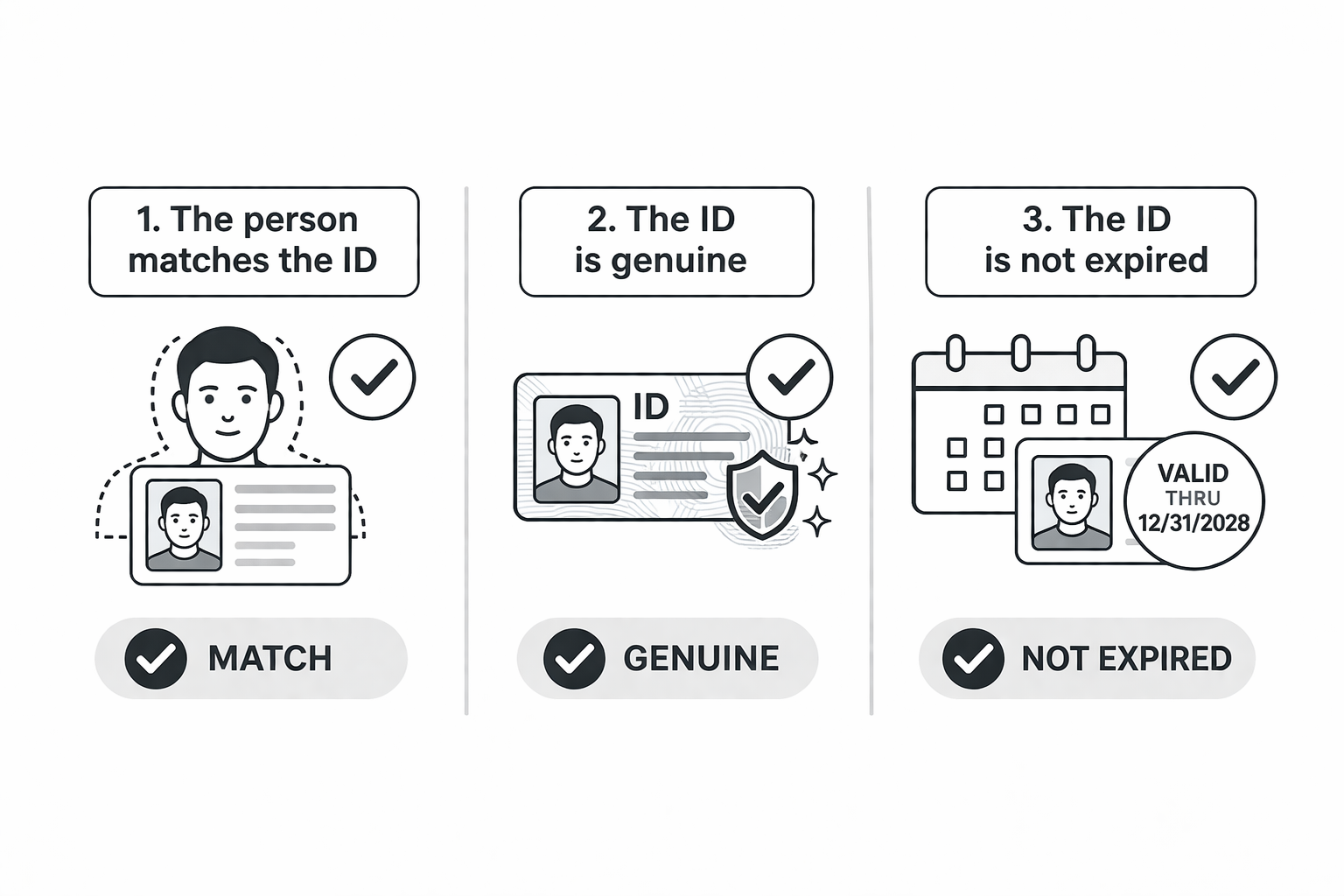
- The notary verifies the client's ID
- The notary says: "Please sign the document in my presence."
- The client signs → the notary completes the notarization
✓Key Points:
- The signer must sign in front of the notary
- The notary verifies identity before or during signing
- No oath is required (unlike a jurat)
- The notary does not verify the content of the document
Signature witnessing focuses on "who signed and how" — not "is the content true."
Signature Witnessing vs Jurat vs Acknowledgement